
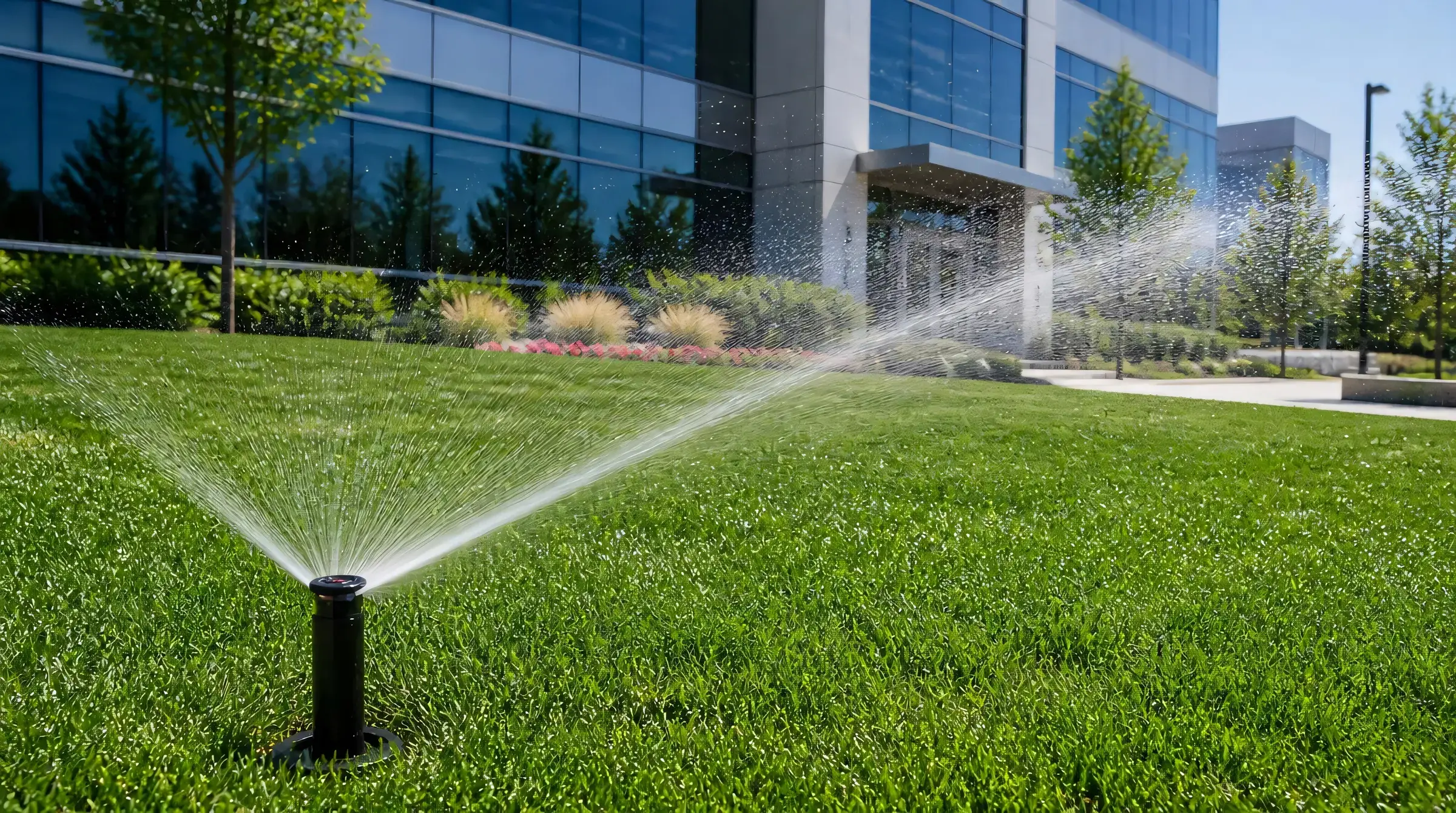
Office Parks · Retail · HOAs · Municipal
CommercialIrrigation
One number to call. One owner accountable for the work. Net-30 invoicing, and a crew that already knows your system — not a franchise sending whoever's free.
Bonded
Cleared for public and contracted work
The Owner On Site
Quoted and worked by the same person
Net 30
Invoiced on terms, not on the driveway
1-Year Warranty
Parts and labor, unless the contract says otherwise
A commercial property
is not a big lawn.
The zones are more numerous, the controllers are older than anyone remembers, and the whole thing has to run without anybody noticing it. Nobody thanks you for irrigation that works. They only notice the brown strip by the entrance and the sprinkler soaking the sidewalk at noon.
The other difference is accountability. On a house, a bad repair is an annoyance. On a managed property, it's a line item you have to explain, a slip hazard across a walkway, and a water bill somebody upstairs is going to ask about. That's why the thing property managers actually want isn't the lowest bid — it's a vendor who picks up the phone and already knows where the valve boxes are buried.
That's the advantage an owner-operated shop has over a big outfit. You are not going to get a franchise sending whoever's free, who need the site walked again every spring. You get Jeremy — who quoted the job and remembers what's under the parking island — and the same crew who did it last time.
Who we work with
Four kinds of property.
Four kinds of problem.
"Commercial" isn't one thing. A retail entrance and a ballfield fail in completely different ways, and they answer to completely different people. Here's what we're actually solving on each.
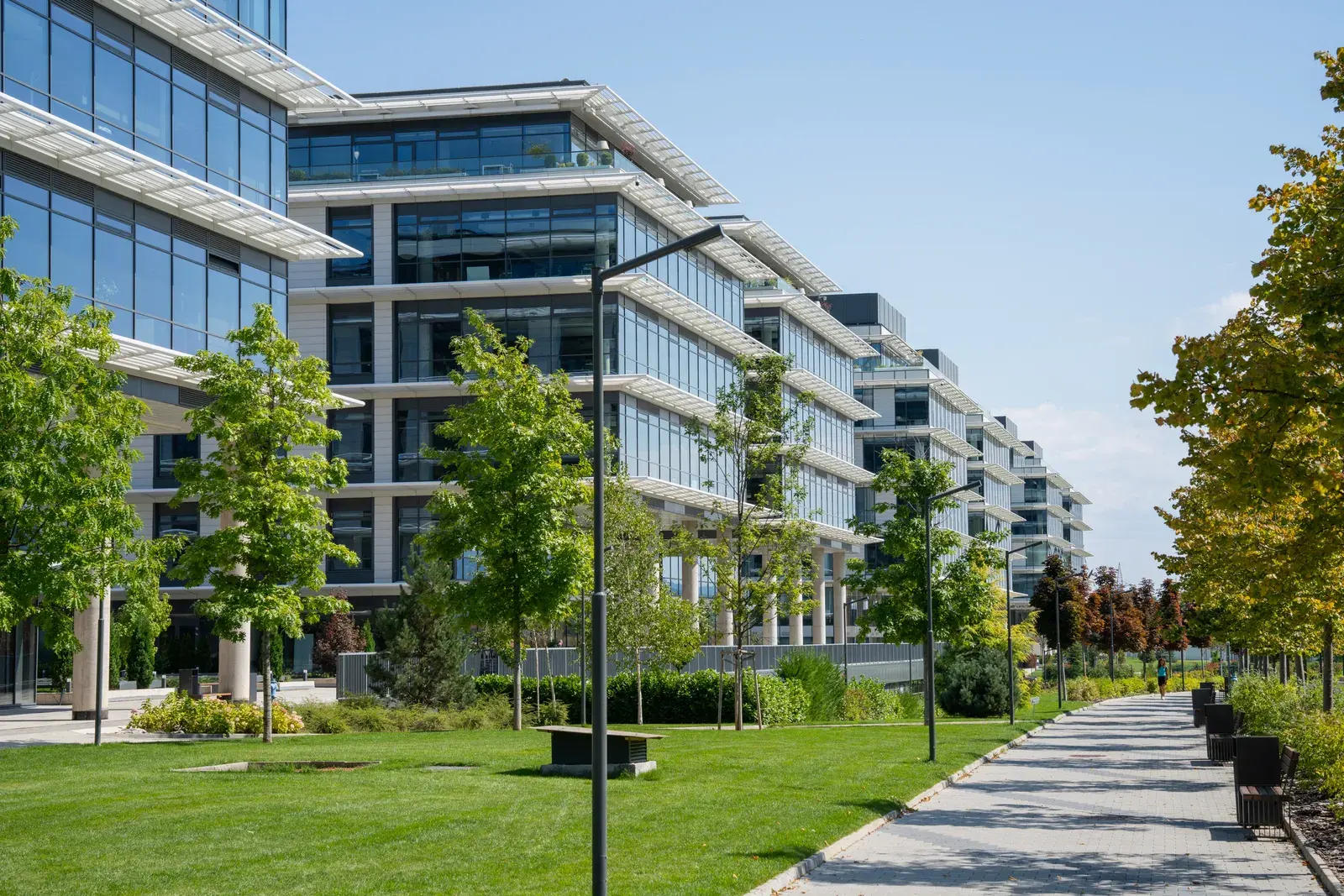
Big turf, tight windows.
Office Parks
Large common areas that have to be watered and dry before the first car pulls in. The failure everyone remembers is a rotor throwing water across the walkway at 8:55am — so scheduling matters as much as the repair does.
- Early-morning windows before staff arrive
- Multi-controller sites
- Overspray off walkways and entries
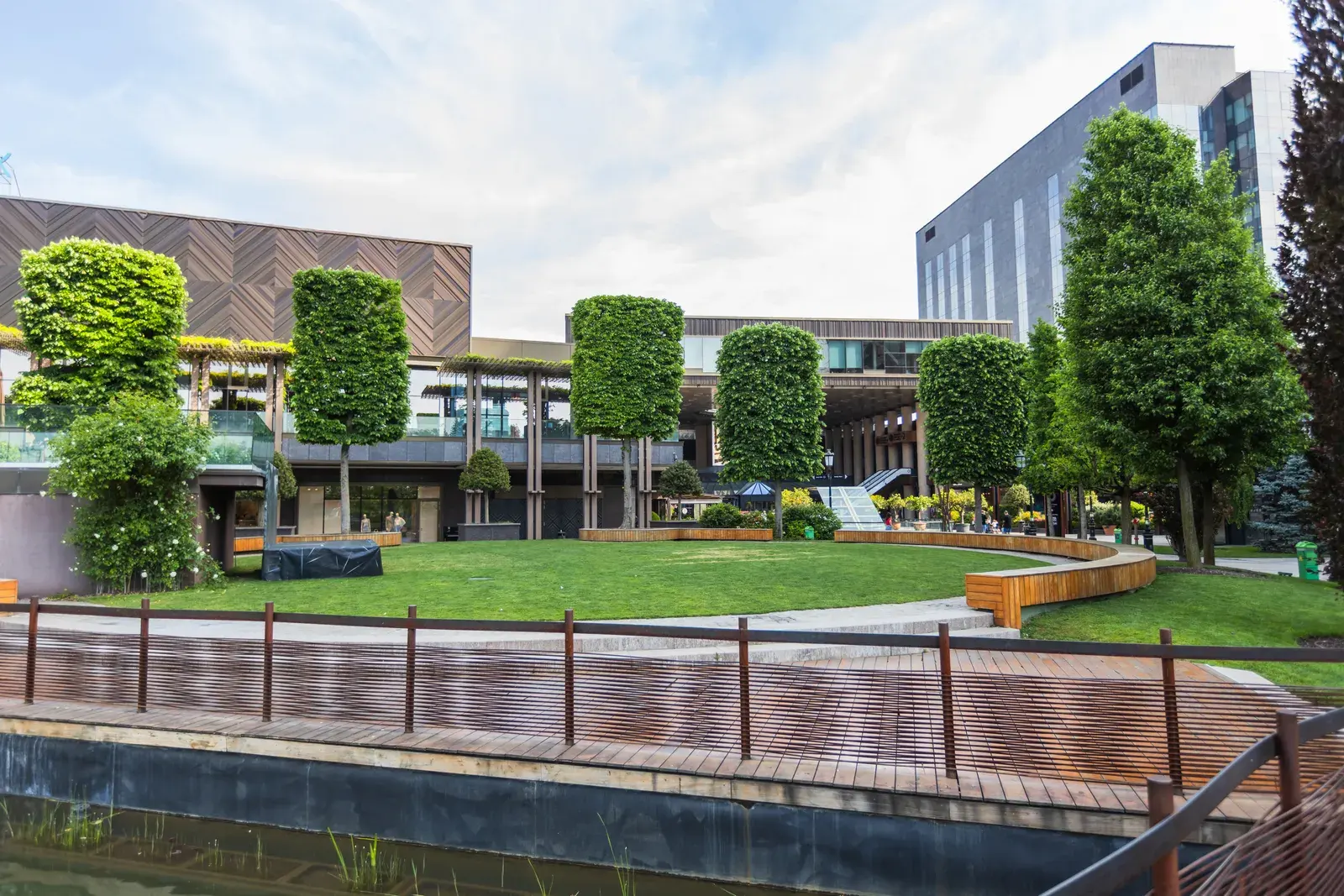
The landscaping is the storefront.
Retail
Entrance beds and parking islands are the first thing a customer sees, and a brown median reads as a business that has stopped caring. These are also the hardest zones to keep alive — narrow strips of turf surrounded by hot asphalt.
- No sprinklers running during trading hours
- Parking islands and entry beds
- Curb appeal is the whole point

Common areas, and a board.
HOAs
Entrances, medians, and green space on one big shared system — usually with more zones than anyone has a map for. The work is only half of it: you need an estimate a board can approve and an invoice a treasurer can file.
- Quotes written for board approval
- Large multi-zone shared systems
- Documented, itemised invoicing
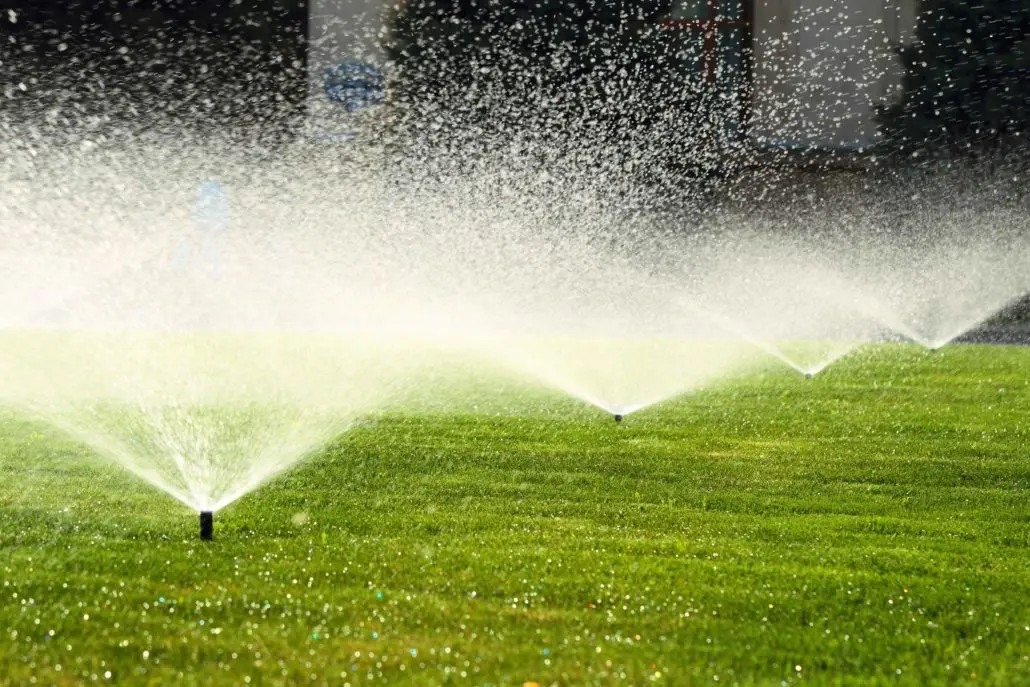
Public ground, public scrutiny.
Municipal
Parks, medians, and ballfields, where the water bill is public money and a soaked sidewalk is a liability claim. Public work also has a paperwork gate before it has a shovel gate — we are bonded, which is the first box most public projects ask you to tick.
- Bonded for public work
- Parks, medians, ballfields
- Scheduling around public use
Somewhere in between — a church, a school, a small industrial lot?Call and ask. The answer is usually yes.
What we do on site
The same four jobs.
Bigger stakes.
01
Spring Start-Ups
Every zone charged, run, and watched before the season — scheduled before your lot fills up for the day.
Details →02
Repairs
Broken heads, cracked mains, dead valves, wiring faults. Quoted before we dig, so you can get it approved.
Details →03
Winterization
Compressed-air blowout before the freeze. On a large property, a split backflow is a capital expense, not a repair.
Details →04
New Installs
Designed around the property's real pressure and flow, zoned so turf and beds aren't fighting each other.
Details →
Before you call
Commercial,
answered.
What kinds of properties do you actually work on?
Office parks, retail, HOA common areas, and municipal grounds — plus the smaller commercial sites that fall between those. If it has more zones than a back yard and somebody has to answer for the water bill, it is the kind of work we do.
Are you bonded?
Yes. That matters most on public and contracted work, where being bonded is a gate you have to clear before anyone looks at your quote.
Do you invoice on terms, or is payment due on site?
Commercial balances are due 30 days from the invoice date. Residential work is due on completion — commercial is net 30, because that is how property accounting actually runs.
How do larger installs get billed?
Projects and installations may run on progress payments, with the final payment due at substantial completion. The schedule is set out on the estimate before anything starts.
Is the work warrantied?
Standard warranty is one year, parts and labor, on all projects unless the invoice or contract states otherwise. Manufacturer warranties apply to parts and equipment on top of that. Warranties do not cover damage from misuse, alterations, freezing, acts of nature, or work performed by others.
Can you work around our hours?
That is usually the whole point on a commercial property. Tell us when the lot needs to be clear and we will schedule around it — early mornings before opening are common.
Why does a commercial property need a mid-season check?
Because the system runs before anyone arrives. Most irrigation cycles finish right around sunrise, so a clogged nozzle or a knocked-over head waters the pavement for weeks and nobody sees it — until the entrance median is brown and it is a phone call from your boss. A mid-season check catches it while the fix is still a nozzle, not a re-sod.
Who actually shows up?
Jeremy. The owner quotes the job and runs the crew that does it. For a property manager that means one number to call and one person accountable for the work — not a franchise sending whoever is free, who has to be walked around the site every visit.

Managing a property
in the metro?
Free estimate, net-30 terms, and the owner on site.
Mon–Fri: 8am – 5pm · Text us anytime at (402) 599-0552