From the Truck · Lawn Health
Dead Spots in Your Lawn After All This Rain? It's Not Your Sprinklers.
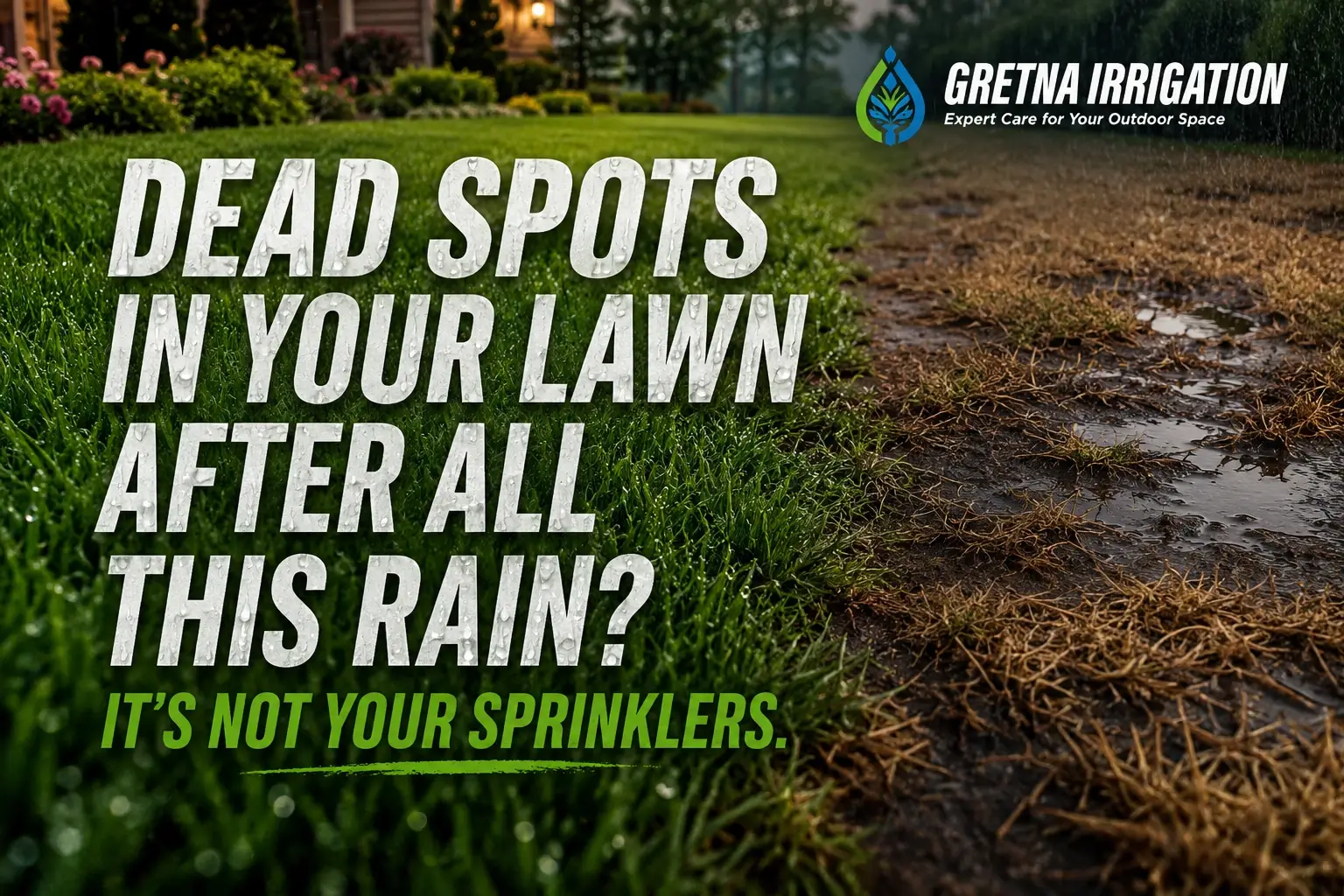
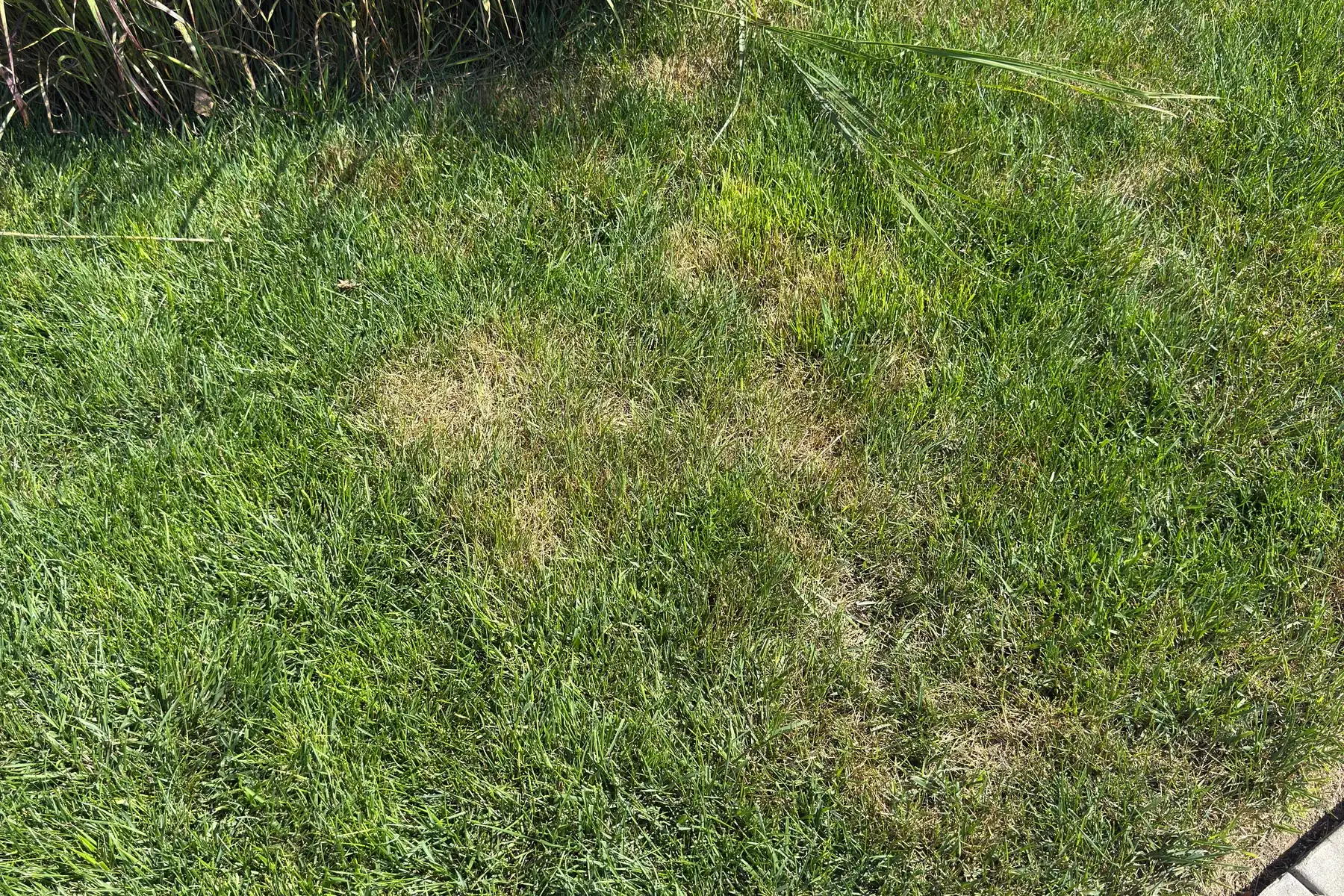
It's been a strange August in the Omaha metro. Weeks of rain. Grass growing so fast you're mowing twice a week. And then you look down and see them — small circles of dead, straw-colored grass, scattered across a lawn that should be the greenest it's been all year.
Your first instinct is to blame the sprinkler system. Good instinct. Wrong this time.
We know, because we're getting the calls. Homeowners across Gretna, Elkhorn, Papillion, and Omaha, all describing the same thing: dead spots, healthy lawn, tons of rain. And when the whole neighborhood has the same spots, it's not anyone's sprinkler system. A broken head or a dead zone shows up in your yard, in one area, in a shape that matches your coverage. It doesn't hit every lawn on the block at once.
What does hit every lawn at once? Weather. And this weather is perfect for lawn fungus.
What's actually killing the grass
The circles you're seeing are almost certainly dollar spot — a turf disease named for patches that start the size of a silver dollar and grow from there. Its cousin,brown patch, makes bigger rings and shows up under the same conditions. Nebraska Extension's turfgrass program tracks both across the state, and this is exactly their season.
Here's the recipe: constant moisture, high humidity, warm-but-not-scorching temperatures, and grass blades that never get a chance to dry out. Sound familiar? That's been the Omaha forecast for weeks.
And here's the part that stings a little: if your sprinklers kept running on their normal schedule through all that rain, you weren't helping your lawn. You were watering a fungus.
How to tell it's fungus (two-minute check)
You don't need a lab test. You need to look closely at one patch.
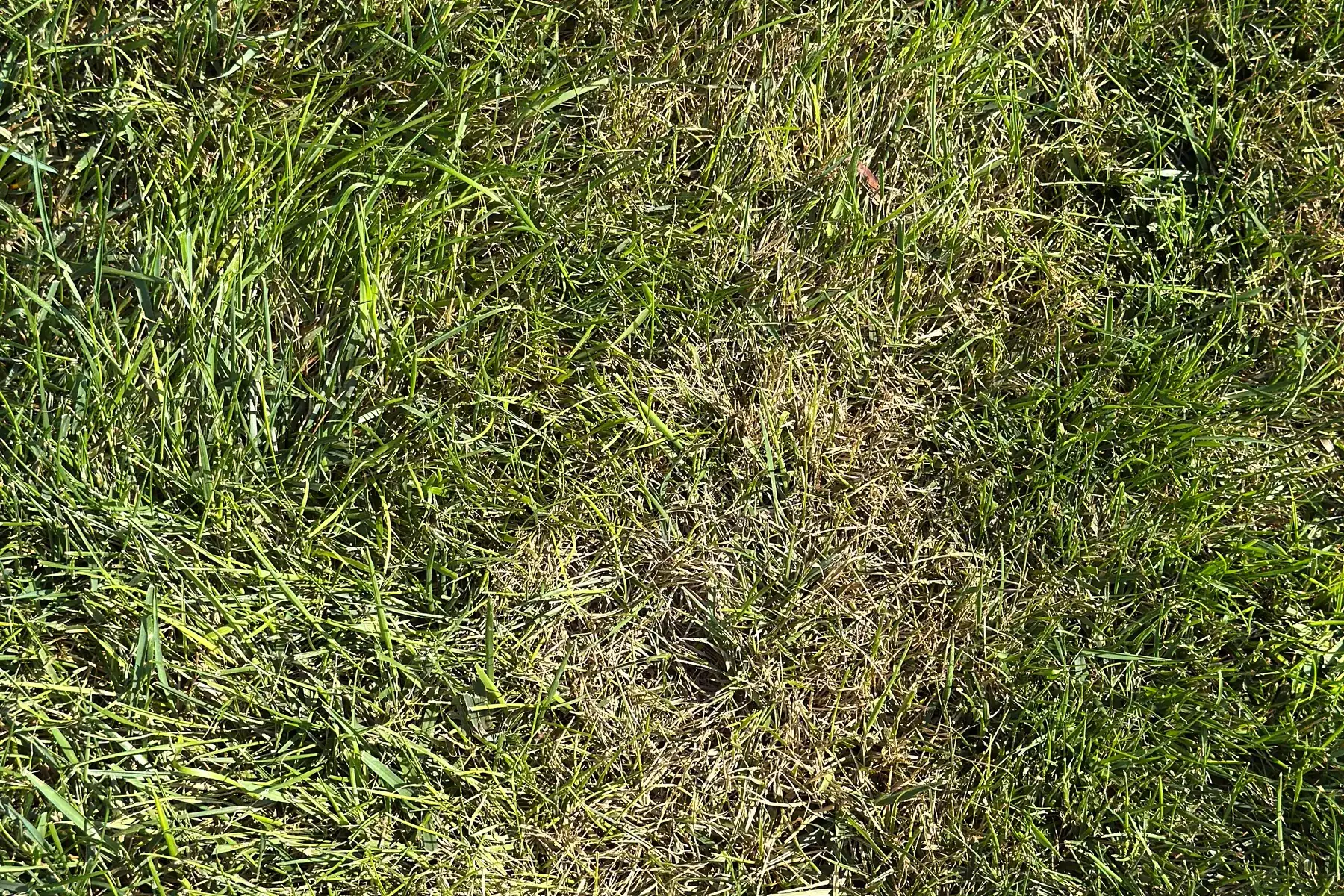
Look at blades, not patches. Fungal damage bleaches individual grass blades tan while the blades right next to them stay green. The damaged grass keeps standing upright. If your patch is a mix of straw-colored and green blades, that's disease.
Do the tug test. Grab a handful of dead grass and pull. If it stays rooted, it's fungal. If it peels up like a piece of carpet, you've got grubs eating the roots — a different problem, and worth a call to a lawn care company.
Check it at dawn. Walk out before the dew burns off. Dollar spot leaves white, cobwebby fuzz on the patches in the early morning. See that, and there's no doubt left.
Rule out the sprinklers anyway. A coverage problem makes crescent or wedge shapes that match your head layout, usually in the same zone, usually in the farthest corners from the heads. Random circles across the whole yard — and the whole neighborhood — don't fit that pattern.
What to do this week
Shut off your sprinkler system. Yes, we're an irrigation company telling you to turn off your sprinklers. The soil is saturated. Your lawn doesn't need supplemental water right now, and every extra cycle keeps the blades wet and the fungus fed. Turn the controller to off and leave it there until we get a genuinely dry stretch.
When you do water again, water at dawn. Early morning watering gives blades the whole day to dry. Evening watering leaves grass wet all night — prime fungus hours. If your controller runs at 7 p.m., that's a settings problem worth fixing.
Mow with a sharp blade, and don't scalp. Dull blades shred grass tips and open wounds for disease. Keep cool-season lawns around 3 to 3.5 inches.
Feed it in September. Dollar spot hits hardest on lawns running low on nitrogen. A normal fall fertilization — Nebraska Extension recommends early September for our area — helps the lawn outgrow the damage and resist the next round.
Hold off on fungicide unless it keeps spreading. Most years, once the weather pattern breaks, these patches grow out on their own in a few weeks. Cool-season grasses recover fast in September. If it's still expanding after things dry down, a fungicide labeled for dollar spot will stop it — but most lawns won't need it.
Where your sprinkler system fits into this
Your system didn't cause the fungus. But a system that keeps watering through a week of rain is making it worse — and wasting money doing it.
Two fixes, both cheap compared to what they save:
A rain sensor. A small device that pauses your system when it's rained. Simple, reliable, and required equipment on every system we install.
A smart controller. Adjusts your watering schedule automatically based on local weather data, so a rainy August like this one means your system just… stops. The EPA's WaterSense program estimates weather-based controllers save the average home thousands of gallons a year. In a summer like this, they also save your lawn.
If your system ran full-schedule through this whole stretch of rain, it's telling you something. A mid-season check takes under an hour: we verify coverage, check pressure, fix the schedule, and can add a rain sensor while we're there. You approve the quote before we touch anything — that's how we work.
One more thing: blowout season is coming
It's late August. The rain will stop, the temperature will drop, and the first hard freeze in eastern Nebraska usually lands in October. Winterization scheduling opens in September, and early slots go first. If you want the spring start-up, mid-season check, and blowout handled in one plan, that's what our seasonal care packages are for.
Why does my lawn have dead spots even though it has rained so much?
Too much moisture, not too little. Constant rain and humidity keep grass blades wet, which lets fungal diseases like dollar spot and brown patch spread. The rain is not killing your grass — the fungus that loves the rain is.
Should I turn off my sprinklers when it rains in Omaha?
Yes. If the soil is already saturated, extra watering feeds fungus and wastes water. A rain sensor or smart controller does this automatically, so you never have to think about it.
How do I know if it is fungus or a sprinkler problem?
Fungus makes random circles with a mix of tan and green blades, often across the whole neighborhood. Sprinkler problems make crescents or wedges that match your head layout, in one zone, in one yard. If your neighbors have the same spots, it is not your system.
Will the dead spots grow back on their own?
Usually, yes. Once the weather dries out, cool-season lawns in eastern Nebraska typically fill back in within a few weeks — especially with a normal fall fertilization in early September.
Do I need to spray a fungicide?
Most lawns will not. Hold off unless the patches keep spreading after the wet weather breaks. If they do, a fungicide labeled for dollar spot will knock it down.
Is a smart controller worth it in Nebraska?
In a summer like this one, it pays for itself in skipped watering cycles alone. It adjusts to local weather automatically — rain means it stops, heat waves mean it adds — and it protects the lawn from exactly the overwatering that feeds disease.